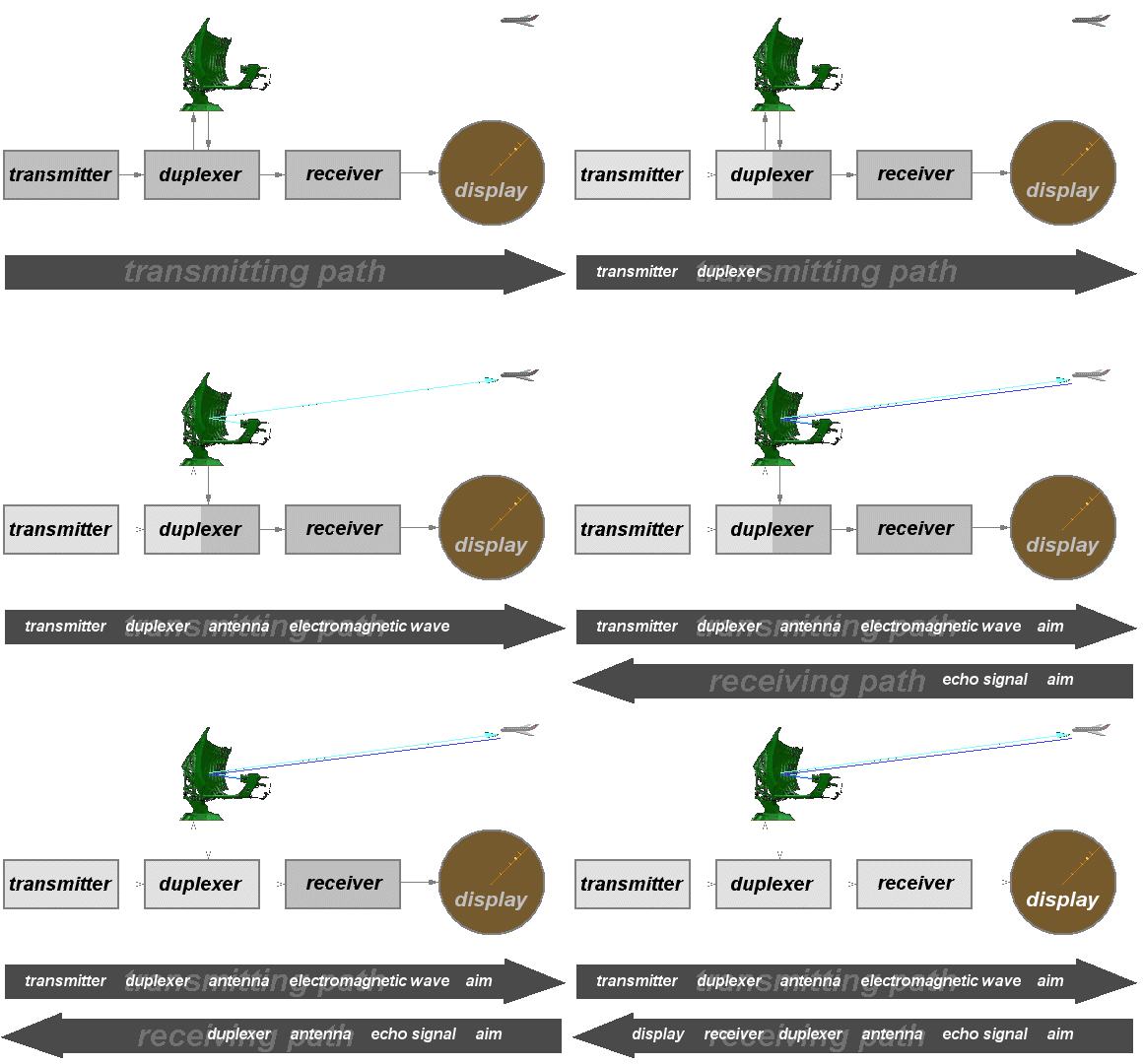
The following figure shows the
operating principle of a primary radar. The radar antenna
illuminates the target with a microwave signal, which is then
reflected and picked up by a receiving device. The electrical
signal delivered by the receiving antenna is called echo or
return. The radar signal is generated by a powerful transmitter
and received by a highly sensitive receiver.
Figure 1:
Block diagram of a primary radar
All targets produce a diffuse
reflection i.e. it is reflected in a wide number of directions.
The reflected signal is also called scattering. Backscatter is the term given to reflections in the opposite direction to
the incident rays.
Radar signals can be displayed on
the traditional plan position indicator (PPI) or other more
advanced radar display systems. A PPI has a rotating vector with
the radar at the origin which indicates the pointing direction
of the antenna and hence the bearing of targets.